
Interim payment certificate No. 14 was certified on time. The commercial manager put it in the cash forecast as received at the end of the month. The end of the month comes and goes: the owner's finance team is waiting for a release from a second funder. Meanwhile, three subcontractor payments, the steel supplier and the month's salaries all fall due in the same week. The project is profitable on paper and short of cash in the bank.
What it costs
A gap between certified and paid does not show as a loss on the cost report, but it is felt everywhere else. Suppliers hold deliveries, subcontractors slow down, the company draws on its overdraft or delays its own payments, and site managers spend their days on the phone instead of on progress. In a company with several projects, two late receipts in the same month can stretch the whole business.
A contractor expects an IPC of AED 2,400,000 to be paid in March. Against it, AED 1,700,000 of supplier and subcontractor invoices and AED 450,000 of payroll and site overheads fall due the same month. The IPC is paid six weeks late. For those six weeks the company has to find AED 2,150,000 from somewhere else.
How it is usually handled
Cash flow is usually a separate Excel file, updated by finance once a month from figures copied out of the valuation, the purchase ledger and the bank statement. It assumes that what is certified will be paid on time, and it rarely shows which supplier invoices fall due in which week. Nobody links the late owner payment to the subcontractor who will now be paid late as a result. The surprise arrives when someone checks the bank balance.
The figures are not wrong. They are simply in three places, a month old, and built on hope.
How Quanto Management handles it
In Quanto Management (Professional and above), money in and money out come from the same project records, so the cash picture follows the project rather than a separate spreadsheet.
- Payment applications build from progress entered by BOQ line. The Engineer certifies line by line, with reasons for any amount held, and the owner approves where the contract requires it.
- Owner payments are recorded and confirmed, and split by funder where a project has more than one.
- Vendor invoices carry their due dates, payments are released after approval, and vendor aging shows what is due, what is overdue and to whom.
- Cash flow shows money in and out by month, and the months that need funding.
- Cheques issued and received are recorded alongside guarantees and bonds.
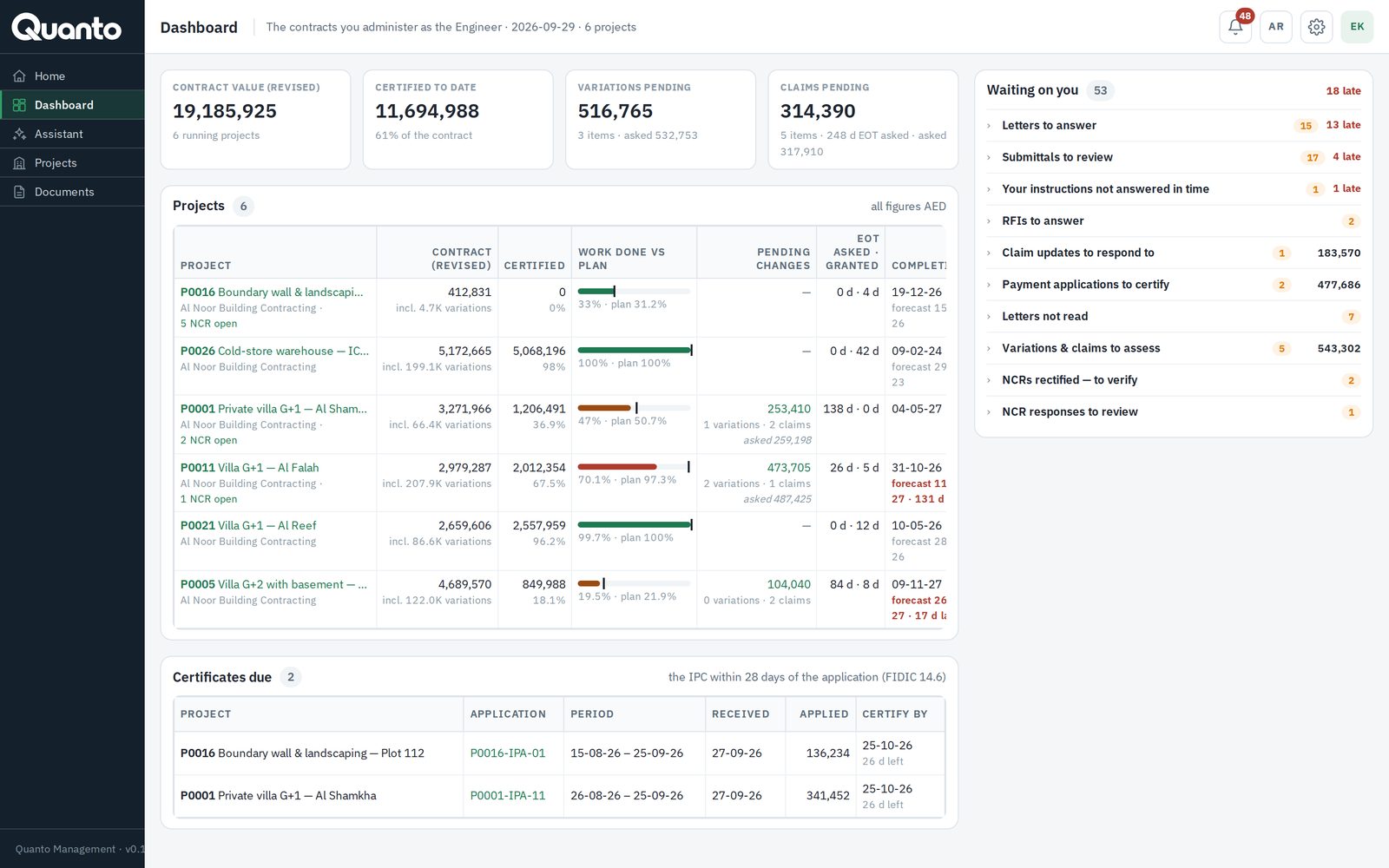
Payment periods are also contract clocks. Where the form of contract sets a period for payment, Quanto counts it on the project calendar and shows what silence means, for example interest due. The owner sees the clocks that apply to it on its own home page. Across the company, the dashboard shows the cash position next to the cost and time status of every running project.
A short checklist
- Forecast each receipt on the date the contract says it is due, then adjust for how this client actually pays.
- List every supplier and subcontractor payment by due date, not just by month.
- Note which outgoing payments depend on which receipt from the owner.
- Check each certified IPC on its payment due date, and write the same day if it is missed.
- Look three months ahead every month, and name the months that need funding before they arrive.
Tomorrow: expired insurance and licences on site.
Follow Quanto for a new article every day: LinkedIn · X · YouTube · Instagram · Facebook